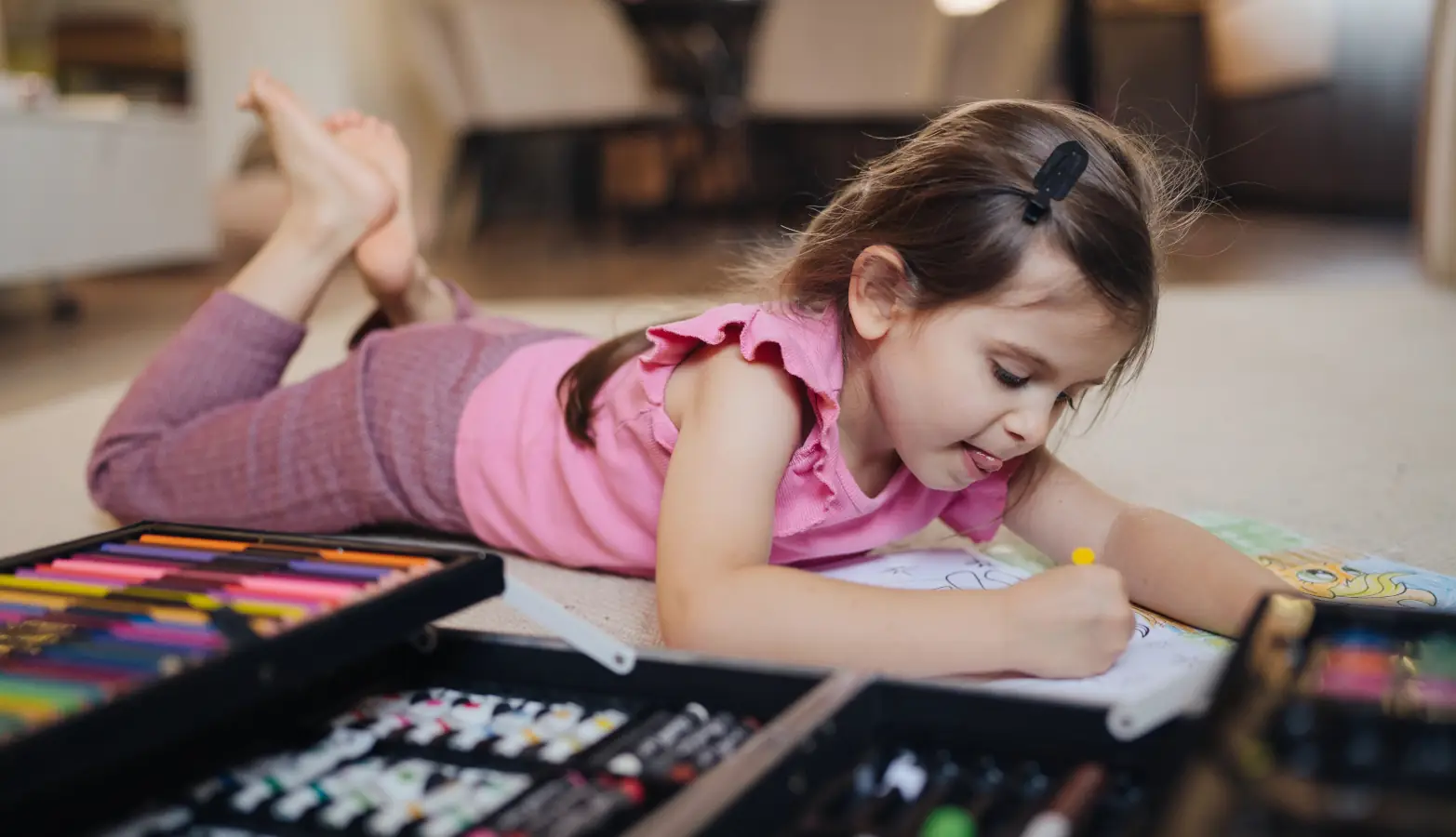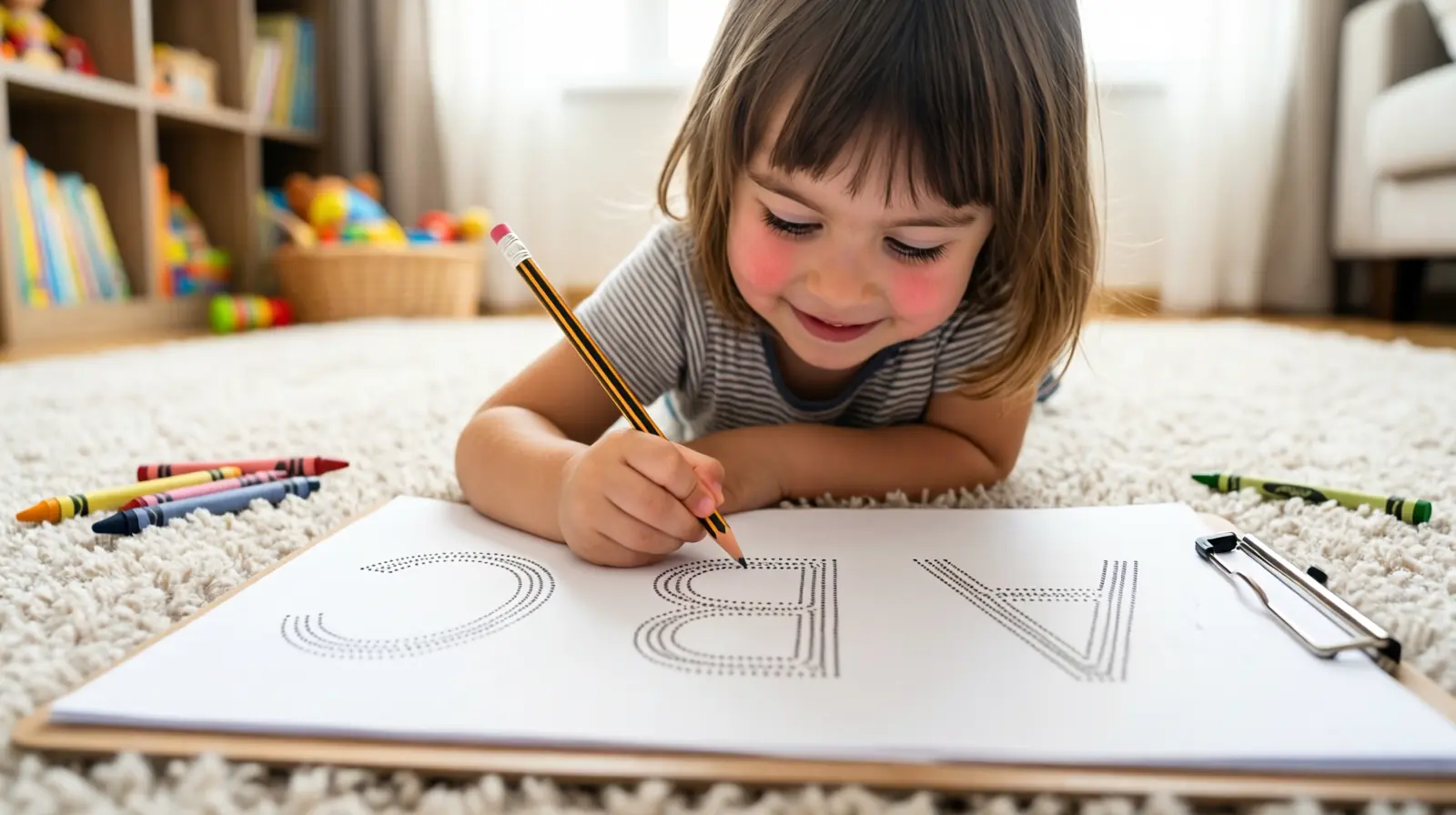
Your kid grabbed a crayon, mashed it into a piece of paper for eleven seconds, then tried to eat it. And now you’re Googling “when should my child start tracing letters” at 11pm while they’re finally asleep.
I’ve been there. We’ve all been there.
The short answer: most kids are ready for simple tracing somewhere between 3 and 4. But “ready” doesn’t mean “will enjoy it,” and “can hold a pencil” doesn’t mean “should be writing their name in cursive by Thursday.”
Let me break it down by age, so you can figure out where your kid actually is — not where some parenting forum stranger says they should be.
What Tracing Actually Is (And Why It Matters More Than You Think)
Tracing isn’t about producing neat letters. It’s not about getting your kid into a better school. It’s not a competition.
Tracing is the bridge between “I can scribble” and “I can control a pencil well enough to write something recognizable.” It builds:
- Fine motor control — the small hand muscles that eventually let your kid button their own coat (you’re welcome)
- Hand-eye coordination — eyes guide the hand, the hand follows a path
- Pencil grip strength — without it, writing in school is genuinely painful
- Letter recognition — tracing an “A” twenty times teaches the shape better than staring at a flashcard
- Confidence — “I made a line that goes where I wanted it to” is a huge deal when you’re three
None of this requires a fancy curriculum. It requires a thick pencil, some dotted lines, and a parent who doesn’t sigh loudly when the line goes sideways. Which it will. Repeatedly.
Tracing by Age: What’s Realistic
Age 2: No. Just… No. (And That’s Fine.)

Two-year-olds should be scribbling. Big, wild, glorious scribbles. On paper if you’re lucky. On the wall if you’re not.
At this age, the hand muscles simply aren’t developed enough to follow a path. And that’s completely normal. A 2-year-old who can’t trace a straight line isn’t “behind.” They’re two.
What to do instead: Give them chunky crayons, big paper, and let them go wild. Playdough, threading beads, tearing paper — all of this builds the muscles they’ll need later. You’re not wasting time. You’re building the foundation.
If you want to put something in front of them, a thick-line colouring book with big, simple shapes is about as structured as it should get at this age — and honestly, half the time they’ll just colour the table. That’s fine too. (We kept the outlines deliberately chunky in our First Colouring Book for 1-3 Year Olds for exactly this reason: a wobbly little hand still “succeeds,” so the fun survives the first attempt.)
Age 3: Maybe. Watch for the Signs.
Some 3-year-olds will happily trace a wavy line. Others will look at the dotted path, look at you, and draw a dinosaur instead. Both responses are valid.
Around 3, you might see:
- They can hold a crayon with their fingers (not a full fist grip)
- They can copy a circle if you draw one first
- They show interest in letters — “what’s that?” pointing at signs
- They can follow a simple path with their finger (not a pencil yet)
What tracing looks like at 3: Straight lines. Wavy lines. Zigzags. Big circles. NOT letters. Letters are too complex for most 3-year-olds. Start with paths — “help the bunny get to the carrot” — and let them draw a line from A to B.
Keep sessions to 5 minutes. Maybe 10 if they’re into it. The second they get frustrated, stop. You want tracing to feel like a game, not a chore.
Not sure whether your three-year-old is actually ready? Don’t buy a book to find out. Print two or three free path-tracing pages from our free library, leave them on the floor with a fat crayon, and just watch. If they go for it, you’ll know by Thursday. If they draw a dinosaur on top of the bunny path instead — also useful information.
Age 4: The Sweet Spot
Here’s where things click for most kids.
By 4, the hand muscles have developed enough that a child can:
- Hold a pencil with a tripod grip (thumb + two fingers)
- Follow a dotted path with reasonable accuracy
- Copy simple letters if they’ve seen them
- Stay mostly inside the lines (emphasis on “mostly”)
This is the age where tracing goes from “cute activity” to “genuinely useful skill-building.” And it’s the age where most kids actually enjoy it, because they can see themselves getting better.
What tracing looks like at 4: Uppercase letters (they’re simpler — straight lines, no tricky curves). Numbers 1-10. Simple words like their name. Shapes. Mazes that require pencil control.
One thing I’ve learned: the difference between a 4-year-old who “hates tracing” and one who loves it is almost always the difficulty level. Too easy = boring. Too hard = “I’m stupid, I quit.” You need the Goldilocks zone.
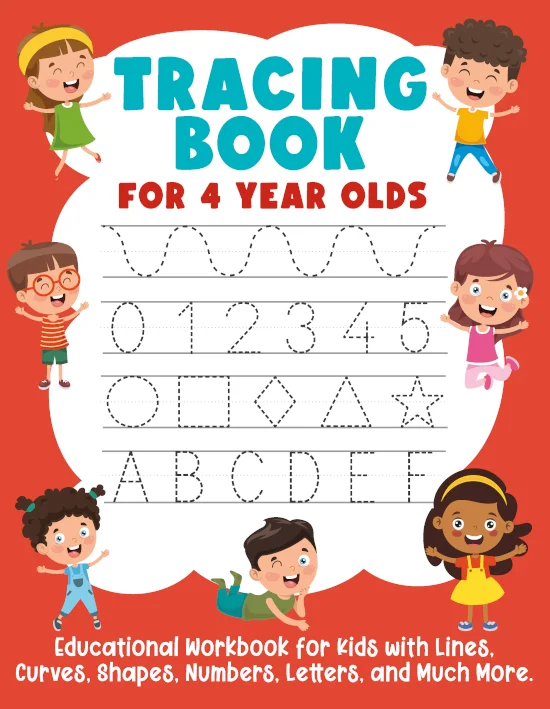
That’s actually why we made our Tracing Book for 4 Year Olds the way we did. It starts with simple lines and shapes — stuff a 4-year-old can nail on day one — and then moves to letters and numbers. Each page is a little harder than the last, but only a little. No jumping from “draw a line” to “write the alphabet in cursive.” The progression is gentle enough that kids don’t hit a wall and throw the pencil across the room. (It happens. Usually at the letter “S.” That little snake.)
🎯 For Your 4-Year-Old: The "Goldilocks" Tracing Book
Too easy = boring. Too hard = "I quit." Our Tracing Book for 4 Year Olds is built to keep your child in the middle:
- ✅ Starts with simple lines and shapes — Day 1 confidence boost
- ✅ Gentle progression: lines → shapes → letters → numbers
- ✅ No "frustration walls" — each page is only a tiny bit harder
- ✅ Answer-friendly format kids can work through independently
Age 5+: Refining, Not Starting
If your kid is 5 and hasn’t done any tracing yet — don’t panic. You haven’t ruined them. You can absolutely start now. But the approach is slightly different.
A 5-year-old has better motor control but also more opinions. They might compare their work to other kids'. They might get frustrated faster because they expect to be good at it immediately.
What tracing looks like at 5: Full alphabet (upper and lowercase). Numbers to 20 or beyond. Simple sentences. Tracing within smaller lines (preparing for school notebooks).
At this stage it’s less about “can they do it” and more about speed, consistency, and the quiet confidence they’ll need when formal writing starts at school. A book that only has baby-thick lines will bore them; one that throws tiny notebook lines at them on page one will crush them. We aimed for the middle with Tracing Letters and Numbers for Kids Age 3-5 — enough variety and enough of a step up that a 5-year-old doesn’t feel handed “baby stuff,” but never so hard that the pencil goes down in a huff.
📚 Quick Pick: Which Book for Your Child?
| Age | Best Book | Why |
|---|---|---|
| 1-2 years | First Colouring Book | Extra-thick lines, simple shapes. No frustration. |
| 3-4 years | Tracing Book 3-4 | Lines → shapes → first letters. Gentle progression. |
| 4-5 years | Tracing Book 4 | Letters, numbers, mazes. Builds confidence fast. |
💡 Not sure? Download free sample pages first.
Signs Your Child Is Actually Ready (Not Just the Age on the Calendar)
Age is a rough guide. Your kid is their own person. Here’s what actually tells you they’re ready.
Physical signs:
- They can pick up small objects (raisins, beads) with thumb and forefinger
- They hold a crayon with fingers, not a full fist
- They can turn pages one at a time
- They can stack 6+ blocks (shows hand control)
Interest signs:
- They watch you write and want to “do it too”
- They ask “what letter is that?”
- They pretend to write (scribbling while narrating “I’m writing a letter to grandma”)
- They enjoy drawing, even if it’s just circles
And the attention side of it: if they can sit with one thing for five minutes, follow a two-step instruction like “grab the pencil and draw a line,” and not immediately ball up the paper when it’s imperfect — that’s your green light.
If you’re seeing 4-5 of these across the board, they’re probably ready for simple tracing. If you’re seeing 1-2, give it a month and try again. No rush. Seriously. The school system will wait. Probably.
One honest caveat: this is a rough guide built on patterns we’ve seen play out over and over, not a diagnostic checklist. Every kid wobbles through this at their own pace, and “not showing many signs yet” almost always just means “not yet,” not “something’s wrong.” If you’re genuinely concerned about your child’s motor development — not just “behind the kid next door” concerned, but a gut feeling that something’s off — a paediatrician or occupational therapist can actually assess that properly. This article can’t, and it isn’t trying to.
How to Actually Start (Without Anyone Crying)
1. Start with your finger, not a pencil
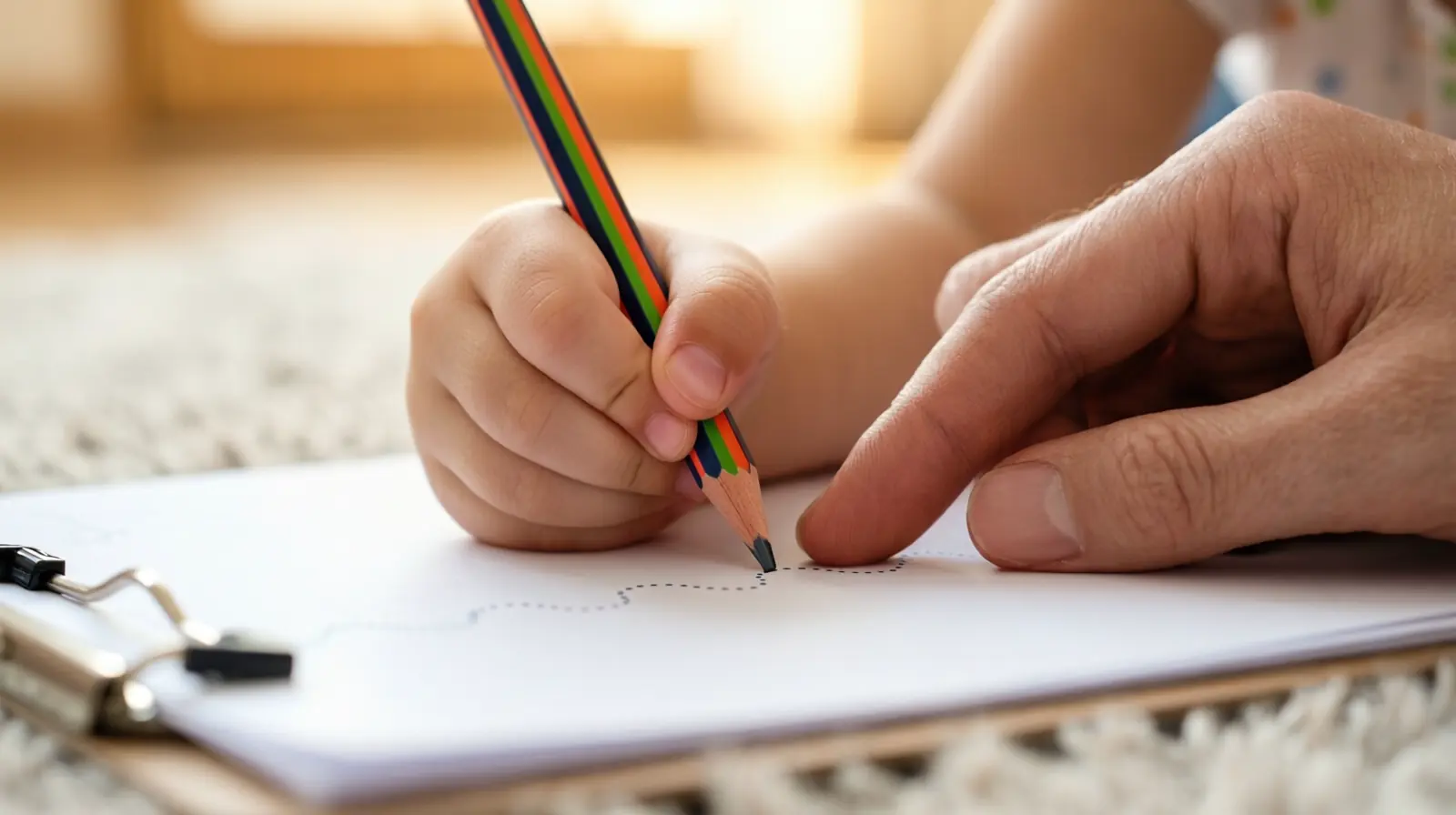
Before a pencil ever touches paper, let them trace paths with their finger. In sand, in shaving cream on the table, in flour on a tray. The sensory feedback helps the brain map the movement without the frustration of controlling a tool.
2. Use thick tools
Thin pencils are the enemy. A thick triangular pencil or a chunky crayon is infinitely easier for small hands. If they’re struggling, it’s almost always the tool, not the kid.
3. Go big, then small
Start with huge letters — draw them on A3 paper, on a whiteboard, on the driveway with chalk. Big movements are easier to control than small ones. Shrink down to normal worksheets only when they’re comfortable.
4. Five minutes is a session
Not twenty. Not “until the page is done.” Five focused minutes, then they go play. You can always do another five minutes after lunch. Short and positive beats long and miserable every single time.
5. Praise the effort, not the result
“That line is SO straight!” is fine if it’s true. But “I can see you’re really concentrating” or “You kept going even when it got wobbly — that’s persistence” is better. You’re building the habit, not the masterpiece.
The Most Common Mistakes (I’ve Made All of These)
Starting with letters too early. A 3-year-old who can’t trace a straight line is not ready for the letter “B.” Start with lines. Then curves. Then shapes. Then letters. The order matters.
Using thin pencils. I cannot stress this enough. A standard HB pencil is designed for adult hands. Give a 4-year-old a thick triangular pencil and watch the frustration drop by half.
Doing it for them. You will be tempted to grab their hand and “show them.” Resist. Let them wobble. Let the line go off the dots. The wobble IS the learning.
Making it a daily requirement. Some days they’ll want to trace three pages. Some days they’ll look at the worksheet and say “no” with the full contempt only a preschooler can muster. Both are fine. Tomorrow is another day.
Comparing to other kids. Your friend’s kid is writing their name at 3. Cool. Yours is building a tower and calling it a “parking garage.” Also cool. Different kids, different timelines. Both are normal.
One more confession, and this one’s about me rather than you. My own kid once spent an entire week drawing nothing but circles and flat-out refusing letters — I genuinely panicked a little, the way you do at 11pm. Then on a random Tuesday she traced her whole first name in one go, start to finish, beaming like she’d cracked a code… and went straight back to circles for another month. I still don’t know what happened on that Tuesday. Kids don’t do linear, and the sooner you make peace with that, the less you’ll end up wrestling a tiny human over a piece of paper.
What About Left-Handed Kids?
Quick note, because this gets overlooked a lot — and it matters more than most parents realise.
Left-handed children don’t just hold the pencil differently. They move the pencil differently. A right-handed child pulls the pencil across the page. A left-handed child pushes it. That tiny difference changes everything about how letters should be formed.
Here’s the problem: most tracing books — even ones labelled “for left-handers” — just show the same stroke directions as right-handed books. So your left-handed child ends up learning to write letters “backwards,” pushing awkwardly against the natural motion of their hand. The result? Wobbly letters, hand cramps, and a kid who decides they “can’t write.”
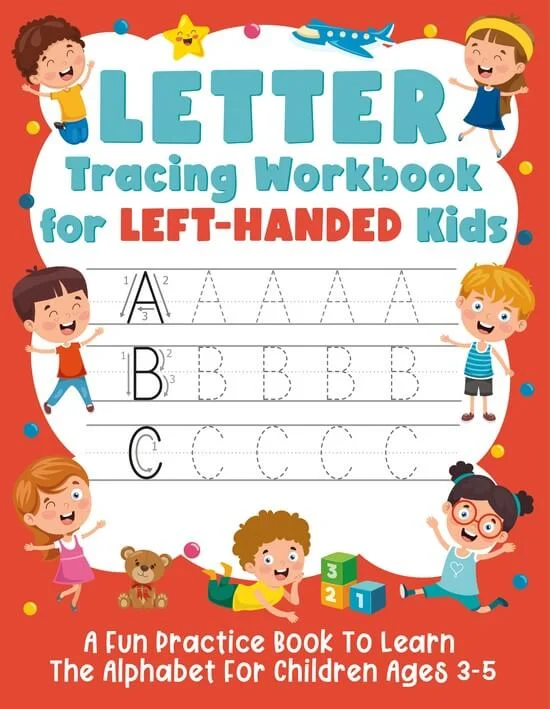
The fix isn’t a fancy layout. It’s simply showing the correct stroke order and direction for a pushing hand — which is what we did in our Letter Tracing Workbook for Left-Handed Kids. Every letter has arrows designed for the way a left-handed child’s hand actually moves. That’s it. No gimmicks, no mirrored pages — just the right instructions for the right hand.
If your kid is left-handed and you’re using any other workbook, at minimum flip the starting points: have them begin strokes from the right side of the letter instead of the left. It’s a small change, but you’ll see the difference in a week.
✋ Left-Handed Kid? Standard Stroke Directions Fight Against Them
Right-handed kids pull the pencil. Left-handed kids push it. Most "left-handed" workbooks still teach right-handed stroke order — so your child ends up fighting their own hand on every letter.
Our Letter Tracing Workbook for Left-Handed Kids fixes this one thing properly:
- ✅ Stroke arrows designed for a pushing hand — the real fix, not a sticker
- ✅ Letters formed in the order that feels natural to a lefty
- ✅ No more wobbly letters from "pushing the wrong way"
- ✅ A-Z practice sized for ages 3–5
Free Pages to Try Before You Buy Anything
You don’t need to commit to a full book to see if your kid is into tracing. We’ve got free tracing and prewriting pages you can download and print right now — no email required, no strings.
👉 Browse the free activity pages
Print a couple. Leave them on the table with some crayons. See what happens. If your kid grabs them and goes for it — great, you’ve got your answer. If they ignore them for three days and then suddenly want to do all of them at once — also great. Kids work on their own schedule.
The Bottom Line
There’s no magic age. There’s no “if they’re not tracing by 3 years and 4 months, it’s over.” That’s not how kids work.
What there IS is a window — roughly 3 to 5 — where most kids develop the motor control and interest to benefit from tracing. Your job isn’t to force it. Your job is to notice when they’re ready, put the right tools in front of them, and then get out of the way.
And maybe hide the good crayons. The ones on the wall. You know the ones.
Frequently Asked Questions
Can a 2-year-old do tracing worksheets?
Not really. A 2-year-old can scribble, and that’s wonderful, but following a dotted path requires fine motor control that most 2-year-olds haven’t developed yet. Stick with free scribbling, playdough, and chunky crayons. The tracing will come.
My 4-year-old refuses to trace. What do I do?
Stop. Seriously. Put the worksheets away for two weeks. Then try again with something different — chalk on the driveway, a whiteboard, tracing letters in sand. The refusal usually means it’s too hard, too boring, or feels too much like “work.” Change the format, not the expectation.
Should tracing come before or after learning letter sounds?
Honestly, people argue about this one, and I don’t think there’s a single correct answer. Tracing doesn’t need letter sounds — a kid can trace the shape of an “M” without having a clue it makes the /m/ sound, and that’s still useful. But if you happen to be doing sounds anyway, saying them out loud while they trace (“This is B, B says /b/") is a lovely little bonus. If you’re not — don’t add it to the pile. One thing at a time is plenty.
How many minutes a day should a child trace?
For a 3-year-old: 5 minutes is plenty. For a 4-year-old: 5-10 minutes. For a 5-year-old: 10-15 if they’re engaged. The moment it becomes a battle, stop. Consistency (a little bit most days) beats duration (one long session that ends in tears).
What’s the best pencil for tracing?
Thick and triangular. The triangular shape naturally guides fingers into a tripod grip. Brands like Stabilo Easyergo or Faber-Castell Grip are good, but any thick triangular pencil works. Avoid standard thin pencils until about age 6. (For what it’s worth, we have three triangular pencils and one regular HB lying around the house, and nobody touches the HB. The triangle just wins every single time.)
Looking for a structured tracing book that grows with your child? Our Tracing Book for 4 Year Olds goes from simple lines to letters and numbers, with difficulty that increases gently — no frustration walls. And if your kid is younger, the Prewriting Skills Workbook for Toddlers is where to start.